
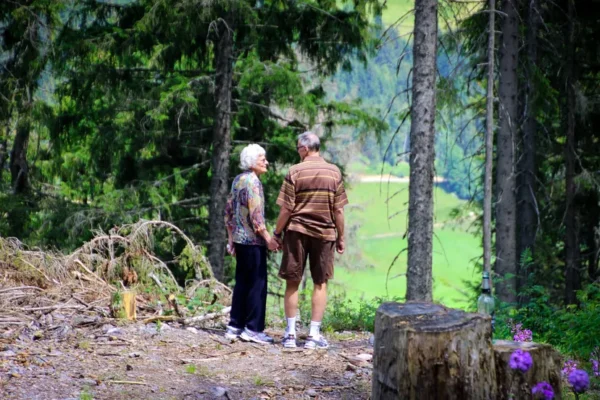
Navigating Senior Life in San Francisco: A Comprehensive Guide
Every stage of life brings its own needs, benefits, and challenges. Children need good schools and playgrounds, young adults seek job opportunities and social connections, and seniors—those 60 and over—face unique considerations, especially in a city as dynamic and expensive as San Francisco.
The Challenges of Aging in San Francisco
Living in San Francisco as a senior comes with distinct obstacles. The high cost of living can strain fixed incomes, while the city’s famous hills and steep stairs can become increasingly difficult to navigate. The urban density that makes San Francisco vibrant also means dealing with crowded streets, heavy traffic, and limited parking. Unlike suburban areas, where you can easily drive to a spacious parking lot and complete your errands, San Francisco requires more strategic planning for even simple tasks.
Why Stay in San Francisco?
Despite these challenges, many seniors choose to remain in the city for good reason. San Francisco’s culture of tolerance, sophistication, and live-and-let-live attitude creates an environment that’s hard to replicate elsewhere. For longtime residents who’ve built their lives here, these qualities make the city feel like home in a way that transcends practical concerns.
Planning for Age-Friendly Housing
One of the most important considerations is housing. Many San Francisco homes feature multiple levels, outdoor stairs, and split-level layouts that can become problematic with age. While solutions like stairlifts exist, they don’t address all accessibility issues and may not be feasible in every home.
Transitioning to a more accessible residence—such as a modern condo with elevators, wider doorways, and flat entryways—may be a better long-term solution. Thanks to Proposition 19, this transition has become more financially viable for many homeowners.
Understanding Proposition 19
Proposition 19 allows California homeowners to transfer their property tax base when they move. If you purchased your home decades ago for $200,000, your property taxes remain based on that original price (with modest annual adjustments), even if the home is now worth $2 million. When you sell and purchase a new home—even one costing $1 million—your property taxes continue to be calculated from that original $200,000 base. This provision makes downsizing or relocating to a more accessible home significantly more affordable.
For those who don’t own property or prefer not to relocate independently, San Francisco offers numerous apartment and retirement community options. However, these can be expensive, so it’s wise to begin researching at least one to two years in advance. Many independent agencies can help you find suitable retirement housing at no cost to you—the retirement communities typically pay their fees.
Navigating Daily Life
Once housing is secured, other aspects of senior life in San Francisco become more manageable. While driving and parking can be frustrating, the city’s density means most neighborhoods have walkable commercial corridors with markets and shops nearby. For those with mobility challenges, numerous for-profit and nonprofit services deliver groceries and meals directly to homes.
San Francisco has also developed robust support systems for vulnerable populations, including seniors. Even during challenging times like the pandemic, the city has maintained strong programs to help older residents thrive.
Essential Resources for San Francisco Seniors
Here are updated resources to help you plan and navigate senior life in San Francisco:
City Services and Support
- San Francisco Department of Disability and Aging Services (DAS)
Website: sfgov.org/dosw
Phone: (415) 355-6700
Provides comprehensive aging services, disability support, and community programs - San Francisco Human Services Agency
Website: sfhsa.org
Offers benefits assistance, including CalFresh, Medi-Cal, and senior services
Senior Centers and Community Programs
- San Francisco Senior Center
Website: sfsenior.org
Phone: (415) 775-4700
Provides meals, activities, classes, and social programs - Self-Help for the Elderly
Website: selfhelpelderly.org
Phone: (415) 677-7600
Offers multilingual services including meal delivery, case management, and housing assistance - Institute on Aging
Website: ioaging.org
Phone: (415) 750-4111
Provides comprehensive services, including PACE (all-inclusive care), housing, and support programs
Transportation Services
- SF Paratransit
Website: sfmta.com/paratransit
Phone: (415) 351-7000
Door-to-door shared rides for seniors and people with disabilities - San Francisco Municipal Transportation Agency (SFMTA) Senior/Disabled Programs
Website: sfmta.com
Offers discounted passes and accessible transit options
Housing Resources
- Mayor’s Office of Housing and Community Development
Website: sfmohcd.org
Information on affordable senior housing opportunities - Senior Housing Information Program
Phone: 2-1-1 (Bay Area-wide information and referral)
Free counseling on senior housing options throughout the Bay Area
Health and Wellness
- San Francisco Health Network
Website: sfhealthnetwork.org
Provides healthcare services regardless of ability to pay - Meals on Wheels of San Francisco
Website: mowsf.org
Phone: (415) 920-1111
Home-delivered meals and nutrition programs
Legal and Financial Assistance
- Legal Assistance to the Elderly (LAE)
Website: laesf.org
Phone: (415) 538-4971
Free legal services for San Francisco residents 60 and older - California Senior Legal Hotline
Phone: 1-800-222-1753
Free legal advice for seniors
Information and Referral
- Eldercare Locator
Website: eldercare.acl.gov
Phone: 1-800-677-1116
National resource directory connecting older adults with local services
This list represents just a starting point. Many of these organizations can connect you with additional resources tailored to your specific needs. Don’t hesitate to reach out with questions—San Francisco’s senior services community is here to support you in building a fulfilling life in this remarkable city.

Greening Projects
Author Bio
Jorge Romero-Lozano, PE, LEED AP, PMP, is Greening Projects‘ Executive Director and Founder. As a licensed civil engineer with a passion for planning, designing, and building green spaces, he provides both technical expertise and the vision to envision potential green spaces, as well as support neighborhoods, individuals, and other professionals who wish to improve their environments and engage their communities.
Calendar – Bernal Heights and Beyond

Mike Doherty serves as Chief Experience Officer at Greening Projects, a nonprofit organization dedicated to transforming underutilized urban spaces into vibrant green areas

Trackbacks/Pingbacks