
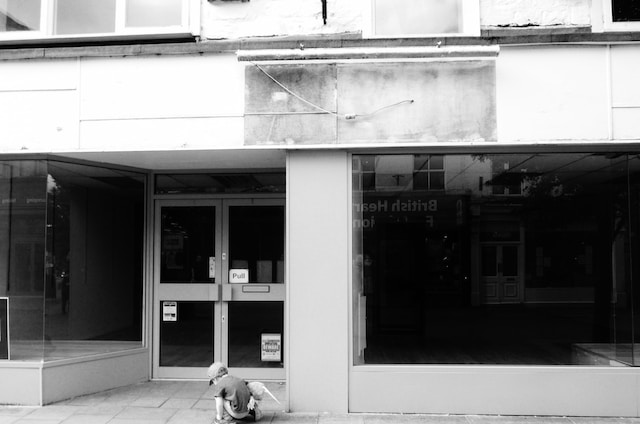
Balancing Act: The Struggle to Fill Empty Storefronts
Empty storefronts are becoming a familiar sight and a real problem for the surrounding neighborhoods. One major driver: landlords holding out for rents that local businesses can’t sustain. When asking prices outpace what a shop can realistically earn, the result is closures, followed by more vacancies.
Ripple Effect
Take Harvey’s in the Castro. When it closed, the damage didn’t stop at its own doors. Aegean Delights, a Turkish spot up the street, saw sales drop noticeably once Harvey’s and the late-night crowd it brought in were gone.
High rents, speculative buying, and a mismatch between asking prices and what businesses can actually afford leave storefronts sitting empty for months or years. Beyond the eyesore, long stretches of dark windows change how a block feels: less safe, less alive. Fewer open businesses also mean fewer jobs and less foot traffic, which drags down everyone else nearby.
No single group can fix that on its own. It takes owners, city hall, and the businesses themselves pulling in the same direction toward rents that are fair enough to keep storefronts full and shops solvent.
Carrot vs. Stick
San Francisco has tried both carrots and sticks.
The carrot is “Vacant to Vibrant,” a pilot program in high-visibility corridors that offers three months of free rent and up to $8,000 in operating grants to businesses willing to move into empty storefronts, along with faster permitting for pop-ups. Landlords who host those pop-ups get a $5,000 grant to cover utilities.
The stick is a vacancy tax. If a storefront sits empty for more than 182 days in a year, the owner pays $250 per linear foot of street frontage in the first year, $500 in the second, and $1,000 in each subsequent year. Voters approved it by a 68% margin in March 2020, just before COVID shut everything down and delayed the rollout. Owners must also register vacant properties annually. Skip that, especially after a complaint, and it’s a $2,844 fine.
Neither approach has gone unchallenged. The vacancy tax, in particular, has drawn lawsuits, and some owners argue it’s unfair to subsidize businesses in one neighborhood while fining landlords in another for circumstances outside their control.
What Actually Moves the Needle
There’s no clean fix, just trade-offs between pushing occupancy and respecting what owners are entitled to do with their own buildings. What seems to help most is cities talking directly with property owners rather than only regulating them. That’s usually where incentives for realistic rents come from.
Two other levers matter too:
- Ongoing monitoring of rental practices and speculative buying, so prices stay tethered to what a business can actually pay.
- Organized pressure from residents, through community land trusts, rent control proposals, and public advocacy, has pushed some cities toward policies that protect small tenants.
None of these fixes the problem on its own. But together, they’re roughly what’s gotten a handful of blocks’ worth of storefronts back.
Resources for Local Businesses

Mike Doherty serves as Chief Experience Officer at Greening Projects, a nonprofit organization dedicated to transforming underutilized urban spaces into vibrant green areas
