
Elevated Joy: Celebrating the Radical Queer Voices of Bernal Heights
While the Castro often steals the global spotlight for San Francisco’s queer history, Bernal Heights holds a quieter, deeply radical legacy all its own. Known affectionately by locals as “Maternal Heights” or the “Lesbian Living Room” of the city in the late 20th century, this hill has long sheltered artists, activists, and counterculture pioneers.
The story of Bernal Heights is written in its steep streets, cozy Victorians, and the vibrant community spaces anchoring the Mission-Bernal corridor.
A Refuge on the Hill
The queer history of Bernal Heights took off in the 1970s and 80s. As rent in other parts of the city spiked, a wave of queer women, radical artists, and alternative families looked south toward the sunny, working-class enclave of Bernal.
What they built was a highly collaborative, fiercely protective neighborhood network. It was a place where backyard fences were low, political organizing happened over kitchen tables, and community meant looking out for your neighbors.
“Bernal became a space where you didn’t have to explain yourself. We were building a world based on mutual aid, art, and acceptance, right on the slopes of the hill.”
Anchors of Expression: El Rio and Beyond
You cannot discuss the queer voices of Bernal without mentioning the cultural institutions that grew along its borders. At the foot of the hill sits El Rio, a legendary Mission-Bernal corridor venue founded in 1978 by Malcolm Thornley and Robert Nett.
Originally opened as a leather-and-salsa bar, El Rio evolved into a vibrant, hetero-friendly queer haven. For decades, its iconic backyard patio has hosted legendary events like Mango, a party celebrating queer women of color and their friends, alongside essential community benefits, live music, and radical performance art.
You cannot talk about the queer soul of Bernal Heights without devoting a massive chapter to Wild Side West. Perched at 424 Cortland Avenue, it is one of San Francisco’s oldest continuously operating lesbian-founded bars, standing as a legendary monument to resilience, community, and sheer defiance.
Founded in 1962 by out-and-proud partners Pat Ramseyer and Nancy White, the bar actually began across the bay in Oakland. It was named after the Barbara Stanwyck film Walk on the Wild Side, which featured a lesbian brothel owner, a nod to the radical idea of a woman calling her own shots. In 1962, it was still illegal for women to work as bartenders in California, meaning the bar’s very existence was an act of rebellion from day one.
Though Pat and Nancy have both passed away, the legacy continues under the stewardship of their close friend Billie Hayes, ensuring the space remains strictly independent and welcoming to the entire LGBTQ+ spectrum. It stands less as a static museum to queer history and more as a living, breathing neighborhood living room where anyone can grab a drink, play a game of pool, and sit under the stars in the garden.
Further up the hill, the neighborhood’s literary and artistic spirit thrived. Bernal has been home to major literary voices, including author Michelle Tea, who cofounded RADAR Productions here. In fact, the global phenomenon Drag Story Hour was originally sparked right here in San Francisco in 2015 by Tea and RADAR Productions, bringing fabulous queer role models and storytelling to local families.
Voices From the Hill: Neighborhood Spotlights
The magic of Bernal Heights has always been its people. Over the decades, diverse advocates, trailblazers, and artists have shaped the neighborhood’s progressive identity.
Tom Ammiano: Longtime Bernal resident, legendary comedian, and progressive champion. Ammiano served on the San Francisco Board of Supervisors and later in the California State Assembly, pushing forward vital LGBTQ rights legislation.
Pat Norman: A foundational activist and leader who lived right on the hill with her family. As one of the first openly lesbian African American women to hold prominent civil rights and public health leadership roles in San Francisco, she left a legacy of intersecting racial justice and queer liberation that remains a bedrock of the community.
Honey Lee Cottrell: The influential photographer and filmmaker spent crucial years capturing the burgeoning lesbian feminist movement from her home base in Bernal. Her lens preserved the raw intimacy and joy of everyday queer life on the hill.
The Sound of Bernal Today
Today, the queer energy of Bernal Heights is both a historic legacy and a living, breathing reality. Walk up to the top of Bernal Hill on any given afternoon, and you will find a cross-section of San Francisco life: queer families walking their dogs, artists catching the sunset, and activist groups meeting in the park.
The neighborhood continues to serve as an indispensable canvas for the International Queer Arts Festival, ecosexual walking tours, and poetry readings that challenge the status quo.
As San Francisco constantly navigates changes in affordability and culture, Bernal Heights stands as a reminder of what happens when queer communities claim a space, plant deep roots, and refuse to let their voices be quieted. It remains a beacon of warmth, creativity, and radical joy on the hill.
Here are just a few of our queer friends on the hill
- Per Sia on Drag, Transition, and Coming Home to Herself
- “A Place to Just Be:” Inside The Barb Shop’s Gender-Affirming Vision
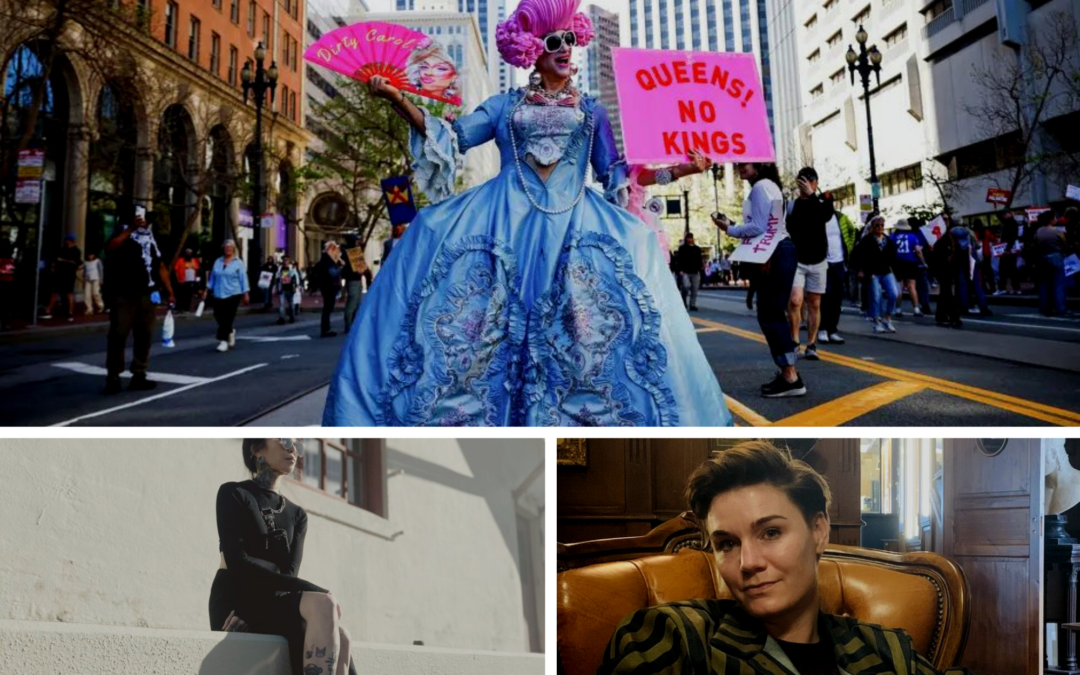
- Getting to Know David Thompson/Dirty Carol
- We All Bleed the Same – UNDRGRND
- The Barb Shop: Building Community Through Cuts and Soft Serve
- A Queer Oasis- Wild Side West
- Reading Between the Cards: A Conversation with Tanya Wischerath
- Queer-Owned and Hetero-Friendly: The El Rio Experience
SF LGBTQ+ Event Calendar 2026

Mike Doherty serves as Chief Experience Officer at Greening Projects, a nonprofit organization dedicated to transforming underutilized urban spaces into vibrant green areas
